Field Notes
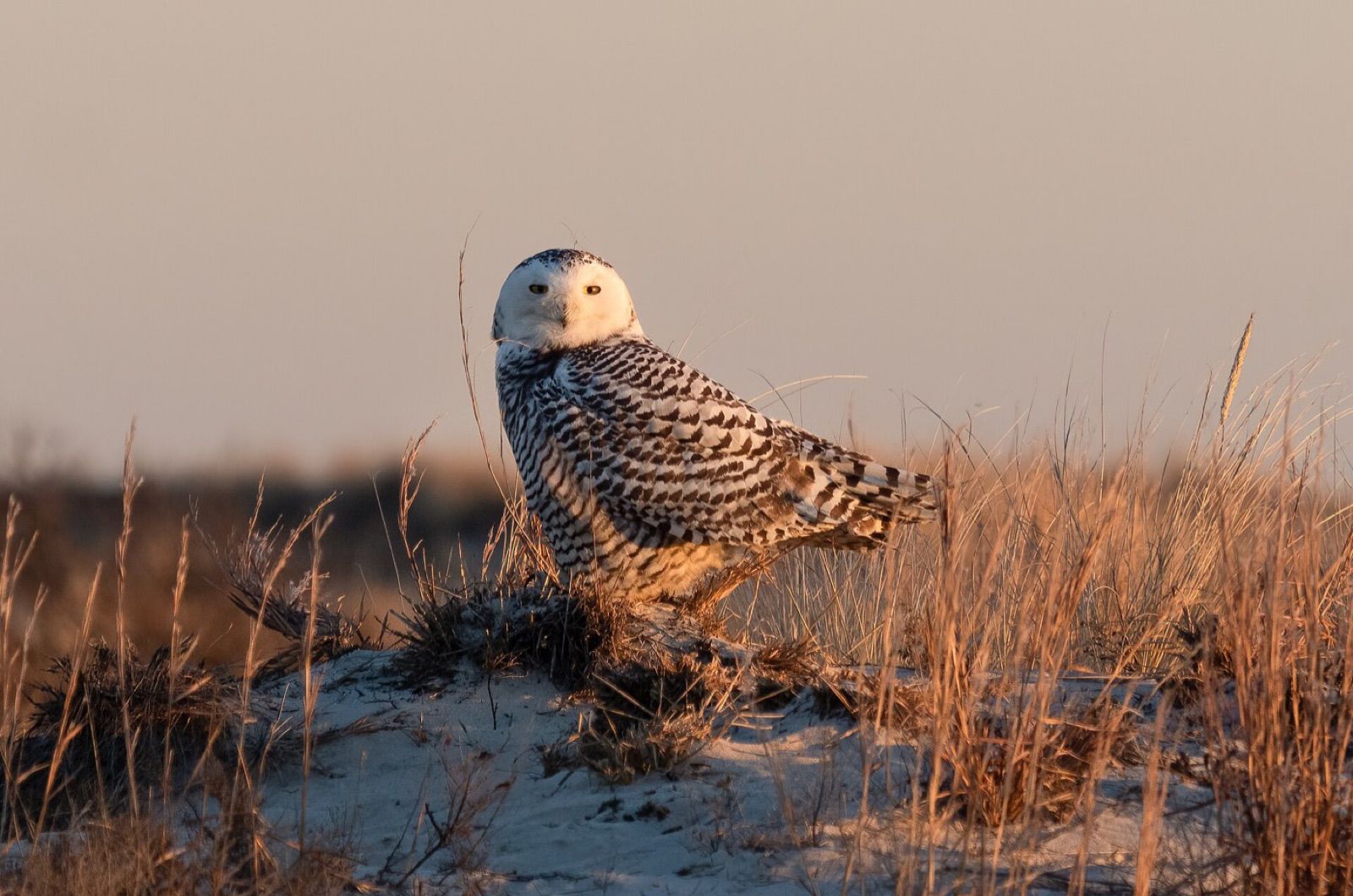
Snowy owls are big, round-headed owls with golden-yellow eyes and no ear tufts. Adult males can be almost pure white. Females and young birds are heavily barred with dark brown, which helps them stay hidden on the nest. Thick feathers cover even their feet, insulating them against Arctic temperatures far below zero.
Unlike most owls, snowy owls hunt by day as well as by night. That’s a necessity in an Arctic summer, when the sun never sets. In a good year, a single snowy owl may eat well over a thousand lemmings. On their wintering grounds they favor wide-open country that looks like home, such as beaches, dunes, farm fields, and even airports.
Scientists once thought snowy owls were plentiful, but newer studies suggest far fewer than previously estimated. In 2017 the species was reclassified as Vulnerable.
At Lake Lisa
A snowy owl this far south is usually a young bird, and often a tired and hungry one. If snowy owls ever visit again, please enjoy them from a distance. Don’t approach for photos, don’t flush them, and keep dogs away so they can rest and hunt undisturbed.
Rare sightings like this are valuable to scientists. If you see a snowy owl, or any unusual bird, at Lake Lisa, consider reporting it on eBird, the Cornell Lab of Ornithology’s public bird sighting database.


