Field Notes
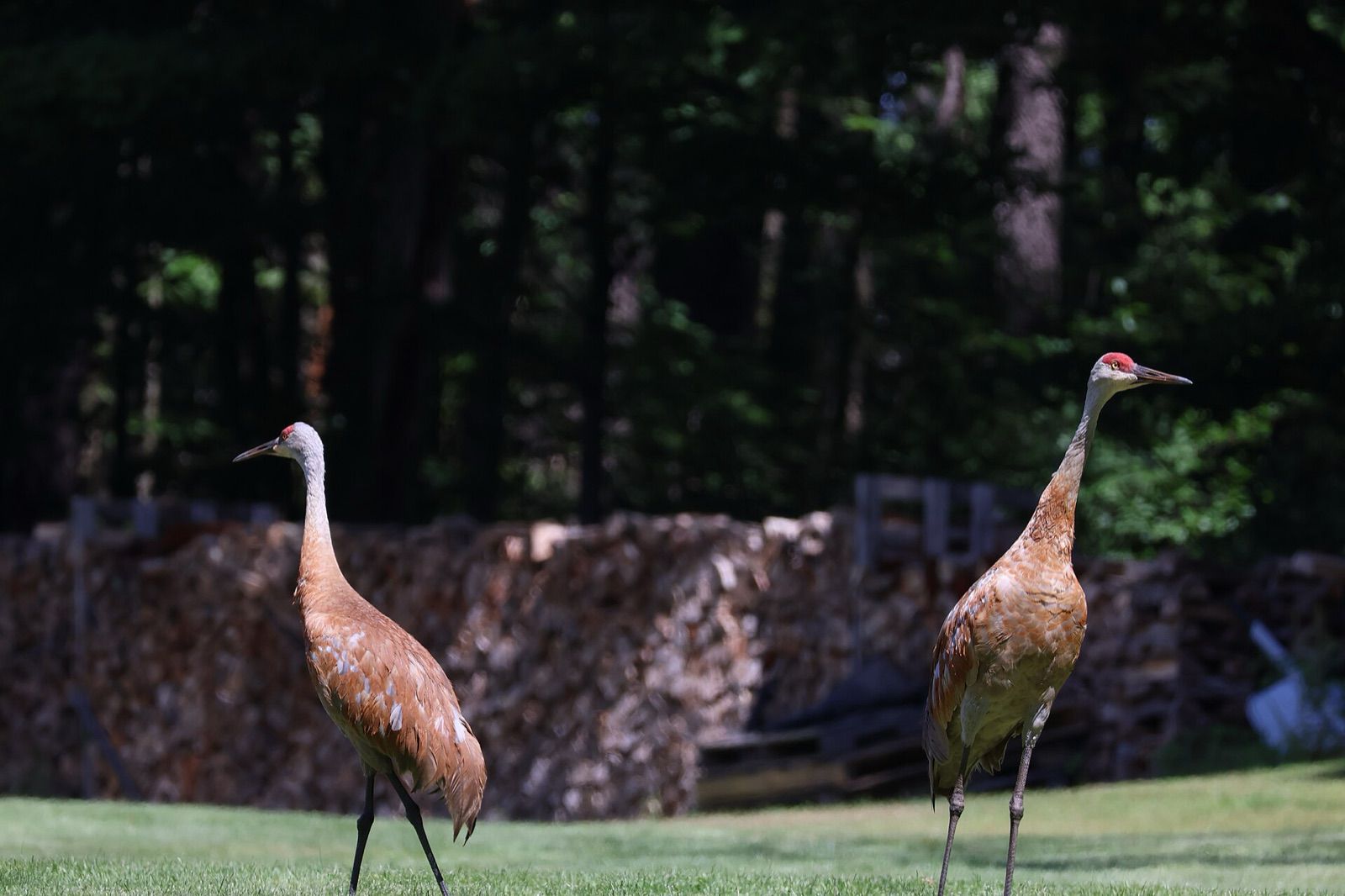
Sandhill cranes are tall and gray, with long legs, a straight bill, and a patch of bare red skin on the crown. Many look rusty brown because they preen with iron-rich mud that stains their feathers. Unlike herons, cranes fly with their necks stretched straight out.
Cranes mate for life and raise one or two fluffy, cinnamon-colored chicks called colts each spring. The family stays together for most of a year, and in spring you may see parents leading a colt across a lawn. Cranes are famous for their dances, which involve bowing, leaping, and tossing sticks and grass into the air.
Please Don’t Feed the Cranes
Feeding wild sandhill cranes is against the law in Florida. Cranes that learn to expect food from people become aggressive and wander into traffic, and many are hit by cars. Give them room, keep dogs leashed, and let them forage on their own.
At Lake Lisa
Sandhill cranes don’t usually feed at Lake Lisa, but they fly over it often. Listen for a loud, rolling garoo-oo-oo overhead, then look up for big gray birds with long necks stretched straight out in front and long legs trailing behind. That straight neck is the quickest way to tell a flying crane from a heron.


