Field Notes
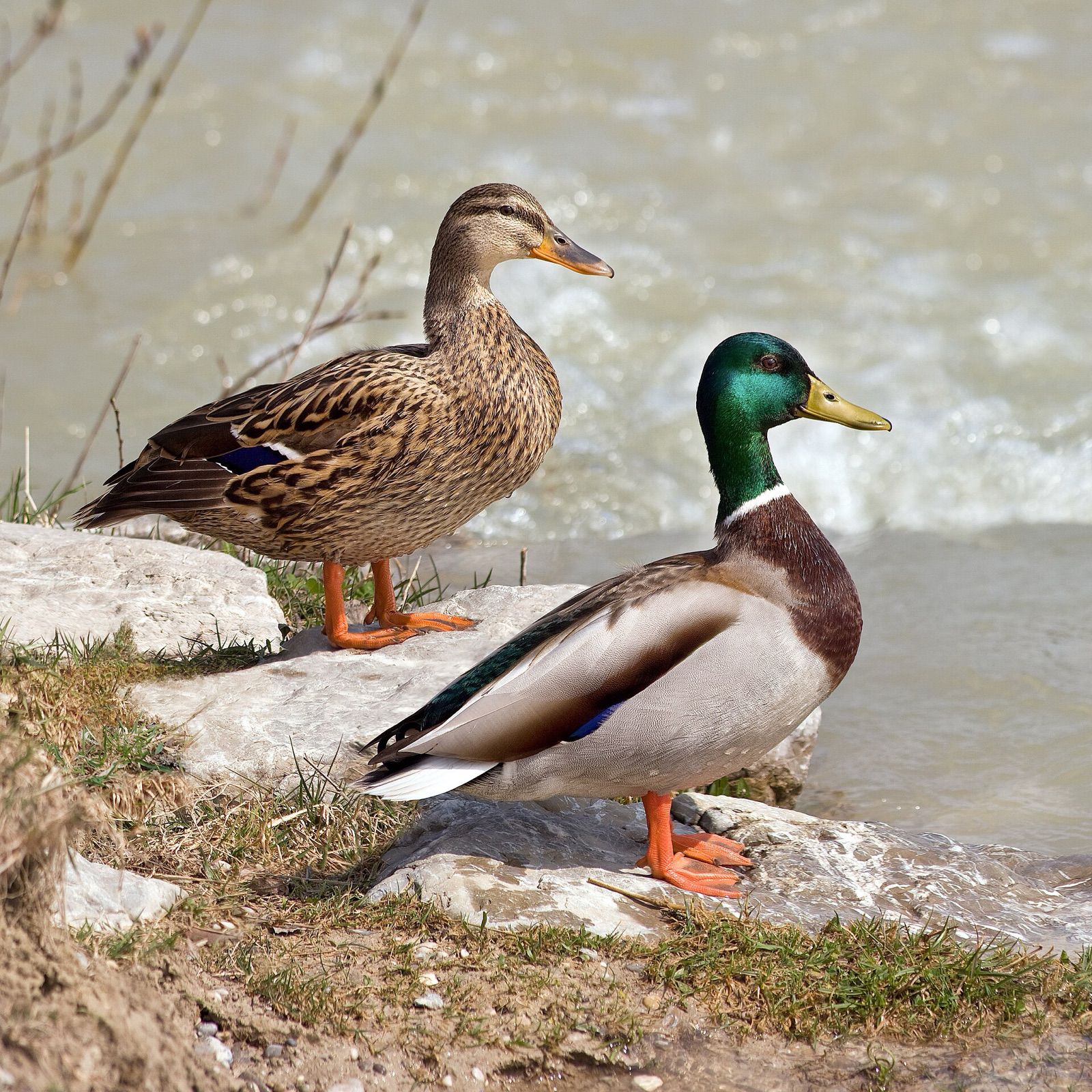
The male, or drake, is unmistakable: a glossy green head, a thin white collar, a chestnut chest, and a yellow bill. Females are mottled brown with an orange-and-brown bill. Both sexes show a bright blue wing patch edged in white. In late summer, males molt into a drab “eclipse” plumage and look much like females for a few weeks.
Mallards are dabbling ducks. Rather than diving, they feed at the surface or tip forward, tail in the air, to reach plants and insects just below the water.
Mallards in Florida
Wild, migrating mallards are fairly uncommon in peninsular Florida. Most of the mallards seen year-round on Florida’s neighborhood lakes are domestic birds, or the descendants of ducks released by people. Many show signs of domestic ancestry, such as white patches, oversized bodies, or odd colors.
That matters because Florida has its own native duck, the mottled duck, a close relative of the mallard. The two interbreed freely, and over generations the hybrids blur the mottled duck’s genes. The Florida Fish and Wildlife Conservation Commission asks people never to release domestic ducks into the wild.
At Lake Lisa
Mallards are some of the most approachable ducks at the lake. Please enjoy them without feeding them. Bread and crackers are poor nutrition for ducks and can pollute the water.


