Field Notes
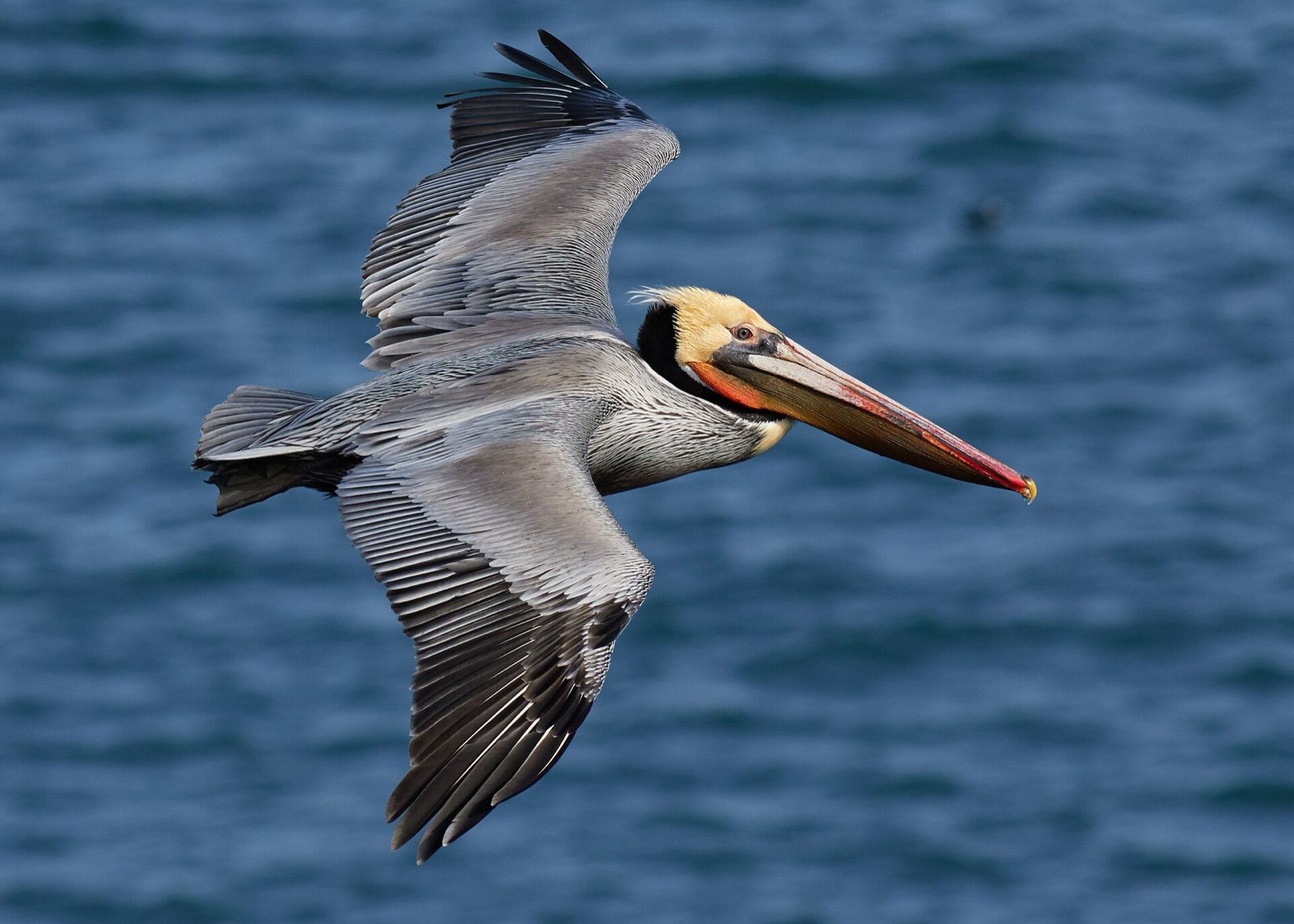
The brown pelican is the smallest of the world’s pelicans and the only one that’s dark. Adults have a gray-brown body, a white neck, and a pale yellow crown. In breeding season the back of the neck turns a rich chestnut. Young birds are brown all over.
The famous pouch is a fishing net, not a lunch box. A diving pelican scoops up as much as three gallons of water with its catch. It then sits on the surface and tips its bill down to drain the water before swallowing the fish. Gulls know this routine well and will sometimes perch right on a pelican’s head to steal a fish.
Brown pelicans nest in colonies, usually on small coastal islands and in mangroves. They fly in long, low lines, often just inches above the water, and they ride the cushion of air off the surface with hardly a wingbeat.
At Lake Lisa
Port Richey sits only a few miles from the Gulf of Mexico, and pelicans regularly cross inland to fish Lake Lisa. The diving pelican in the video on our home page was filmed on the lake. Watch the open water near the center of the lake: a pelican circling overhead with its head pointed down is usually about to dive.


