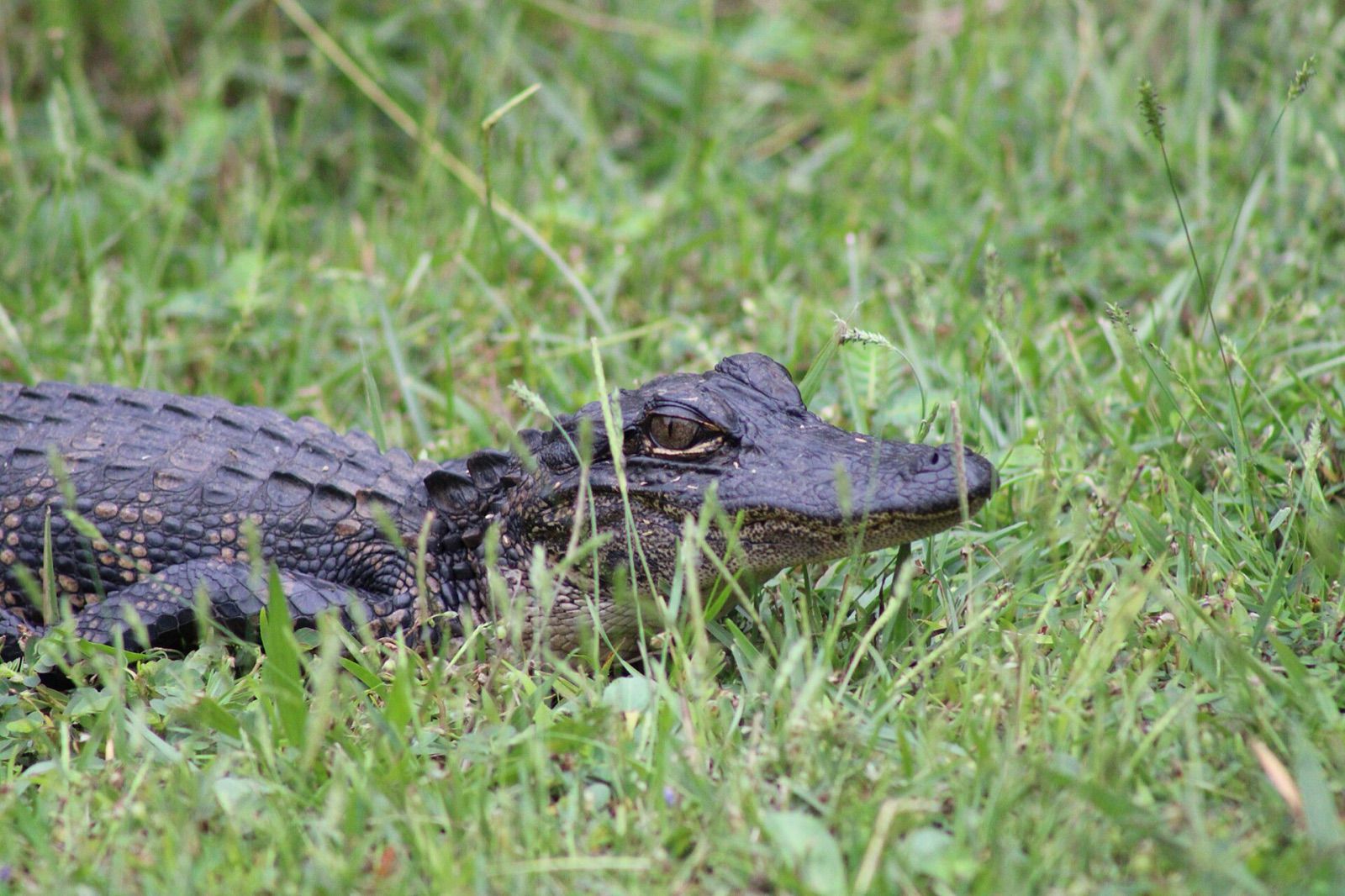
A Young Gator
Lake Lisa’s alligator is small, a youngster rather than the giant most people picture. Young alligators are dark with bright yellow crossbands that fade as they grow. Hatchlings are only about 8 or 9 inches long, and in good conditions a young gator may grow several inches to a foot a year.
Being small is dangerous for an alligator. Young gators are eaten by herons, egrets, raccoons, otters, large fish, and bigger alligators. That’s one reason they stay hidden along the shoreline, among plants and under overhanging brush, and slip underwater at the first disturbance.
Field Notes
Alligators are cold-blooded and regulate their body temperature by basking in the sun and retreating to the water. They’re most active from spring through fall. In winter they slow down, eat little, and spend long hours basking on cool sunny days.
A floating alligator often shows only its eyes, nostrils, and a few bony ridges along its back. Alligators can stay underwater for long periods, so a gator you saw a minute ago may now be somewhere you can’t see it.
Staying Safe Around Lake Lisa’s Alligator
Even a small alligator has a strong bite, and it will grow. Alligators generally avoid people, and serious incidents are rare. Simple habits keep it that way:
- Never feed an alligator. It’s illegal in Florida, and fed alligators lose their fear of people. A gator that approaches people usually has to be removed.
- Keep dogs leashed and away from the water’s edge. To an alligator, a small dog looks like prey.
- Keep children back from the shoreline, and don’t swim or wade in the lake.
- Keep your distance. Admire it from at least 30 feet away. Never approach it for a photo, and never try to catch or handle it, no matter how small it is.
- Don’t throw fish scraps or bait into the water.
If an alligator acts aggressively or seems to be a threat to people or pets, call the Florida Fish and Wildlife Conservation Commission’s Nuisance Alligator Hotline: 866-FWC-GATOR (866-392-4286).


